Tuesday, January 6, 2015

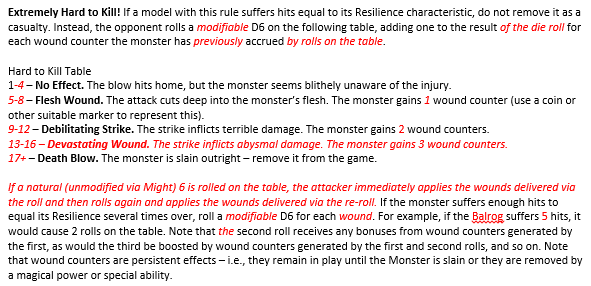
Ridiculously Hard to Kill! The Mumak's Special Rule [Part 5/5 of the Hard to Kill Series]

This is the end of the Series for the Hard to Kill Special Rules. This post will cover the Ridiculously Hard to Kill! Special Rule and provide an example of how one may go about fighting this thing in a game.

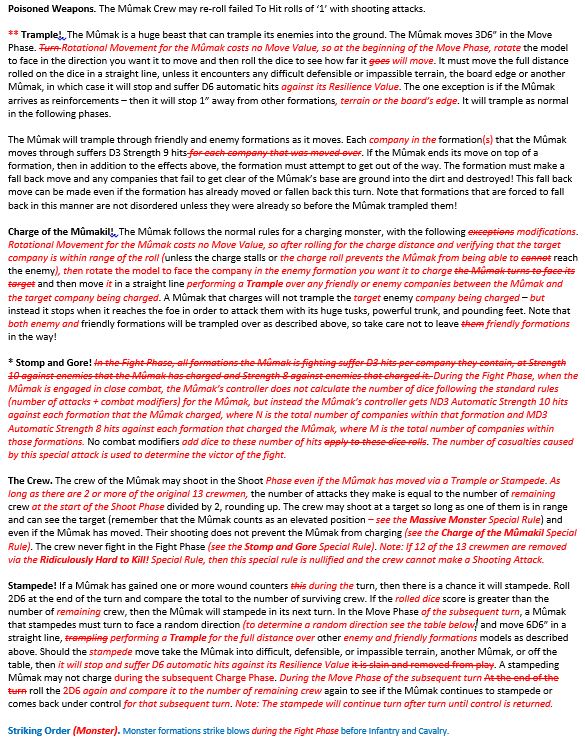
The Mumakil in The Fallen Realms Army is the only formation that has this special rule. Once again, the good armies do not get any equivalent characters with it, unfortunately.


The first thing to notice is that it has the same ranges as the Extremely Hard to Kill! rule, it just has the additional effect of removing crew members (thusly reducing its capability to Shoot during the Shoot Phase and increasing its probability of Stampeding) as wound counters are applied to the Mumakil.


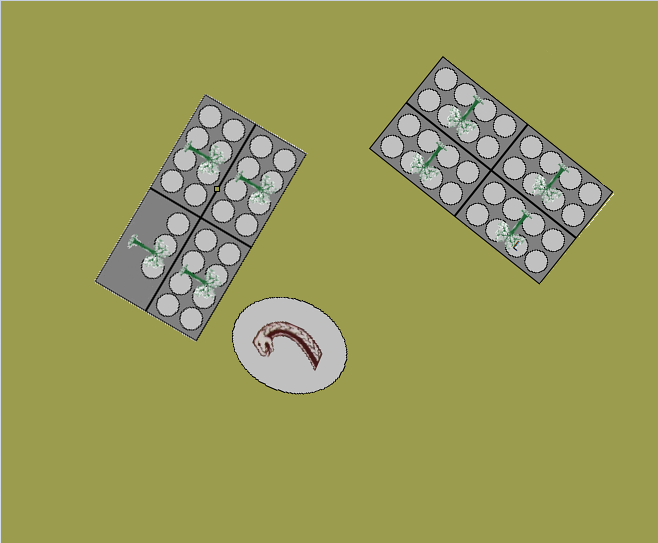
Let's go through an example and have Legolas (in the Front left company of Formation 1 - marked with an "L") and some Minas Tirith Warriors go to town on a Mumakil!


STEP-BY-STEP EXAMPLE OF THE FIGHT

Round 1:

Priority Phase

Gondor rolls a 1 and the Mumak rolls a 2. The Mumak Wins Priority for the Round.

Move Phase

The Mumak rotates Counter-clock-wise to aim toward Formation 2 of the Minas Tirith Warriors (recall that this rotation move cost is free under the Trample rule). For the Trample distance the Mumak rolls a 5, 3, & 6. Totaling 14" for the Move. The front two companies of Formation 2 are trampled, this means that the Mumak deals 2D3 Strength 9 hits to Formation 2. For the two dice that he rolls he gets a 5 & a 5 - that means 6 Strength 9 hits to Formation 2. Strength 9 versus Defense 7 means that he needs 3's to Wound. The six dice he rolls results in a 1, 3, 3, 3, 4, & 3 - thus 5 wounds on the Minas Tirith Warriors Formation 2. Formation 2 has to take a Fall Back! roll and rolls a 1 ... meaning that they fall back 3" (that wasn't a very good roll - but at least enough to get clear of the Mumak).

It is now Good's turn to move. Formation 2 decides that they want to expand their frontage so that the inevitable charge from the Mumak will not be as devastating - however since the Mumak is within 6" of Formation 2, they have their Move Value halved and can only move 3". To reconfigure to a 3x2 configuration from the 2x2 would require a move of 4.93" ... so that's not possible; and to go to a 4x1 configuration from the 2x2 would also require a move of 4.93", so that's not possible, either. Guess they have to stay the way they are configured ... As for rotating ... as a 2x2 configuration with a 3" Move value, we could rotate clock-wise or counter-clock-wise 37.45-degrees - maybe a counter-clock-wise rotation would be the best move. Here's hoping! Formation 1 decided to rotate 45-degrees clock-wise so that Legolas can have Line-of-Sight to the Mumak. This uses up 3.49" of their movement value - so they have 2.51" left for translational movement. They move forward toward the  Mumak the remaining distance.

Shoot Phase

The Mumak has priority, so gets to shoot first. According to The Crew rule, the Mumak gets 13/2 = 6.5 Shots, rounded up to 7. The crewmembers are armed with Bows, so have a 24" Range and a Strength of 2. They decide to continue to barrage Formation 2 - since it is already a little depleted (and no matter which formation they target they will be attacking the front, so they will have Defense 7). For Strength 2 against the front of Formation 2's Defense 7 means they need 6/4's to wound. For the 7 dice, they roll: 3, 5, 5, 1, 1, 1, & 5. Due to the Poisoned Weapons special rule, they get to re-roll the 1's ... so they pick up the three 1's and get: 4, 4, & 2. No 6's - so all the shots miss. Good's turn for the Shoot Phase. Since Formation 2 has no ballistic capabilities, they cannot do anything - but Formation 1 has Legolas in it - and he decides to use his Crippling Shot special rule on the Monster. Legolas rolls a 6 for Crippling Shot - meaning that the Mumak's Resilience Value is reduced by 1 (from 2 down to 1) for the remainder of the turn. Now's the chance to go crazy! Legolas also expends a point of Might (down from 3 to 2) and calls an Epic Shot. He nominates the Mumak and deals 1D6 automatic hits to the Mumak. He rolls a 3 - meaning 3 hits against the Mumak's Resilience of 1 ... 3 rolls on the Ridiculously Hard to Kill! table. The First roll of the dice produces a die value of 2 - No Effect. The Second roll on the table produces a die value of 6 - Flesh Wound: Slay one crewman and gain 1 counter (now down to 12 crewmen) and a natural 6 gives a re-roll! The re-roll die value is 5 ... adding the one counter produces a critical value of 6 - Flesh Wound: Slaying an additional crewman and gaining another 1 counter (now down to 11 crewmen and 2 counters on the Mumak). The Third roll on the table produces a die value of 3 ... adding the 2 counters gives an attack value of 5 - Another Flesh Wound: Slaying another crewman and adding another counter (remaining crew = 10; counters = 3). Not too shabby, Mr. Legolas!

Charge Phase

The Mumak decides it is going to charge Formation 2. He rolls a 5 for the Charge - so the charge is successful. Having been charged by a Monster with Terror, Formation 2 rolls their courage test: 1 & 3. Adding their courage of 3 gives 7 ... not enough - so Formation 2 is reduced to Fight 0 for the remainder of the turn. Formation 1 nominates the Command Company with Legolas as the Spearhead and measures the distance to the Mumak - 7.57" ... meaning they will need to roll a 6 to reach him. They roll for the Mumak's Terror: 2 & 4. Adding Legolas' Courage of 6 gives 12 ... so that's a Pass. For the charge they roll a 5 ... Legolas uses another point of Might to adjust it up to a 6 (plus now it's an Unstoppable Charge!)... Legolas is now at 1 Might Point remaining, and the charge is successful - hopefully it will be enough with the Mumak's Resilience still reduced during the Fight Phase. Since the Mumak is being charged by a company with Terror (due to Legolas providing it via the Bestow Terror Special Rule) the Mumak rolls its Courage Test: 4 & 1 ... adding the Mumak's Courage Value gives 9 ... LOL ... the Mumak is Fight 0 for the turn, too! (Bad day Mr. Mumak!)

Fight Phase

The Mumak has priority - but even if he didn't he would still get to attack first (because of Striking Order [pg 46] and he is Type: Monster - and Legolas' Swift Strike only gives the Infantry Formation Striking Order (Cavalry) - so they get to go second and finally Formation 2 last ...). According to the Stomp and Gore special rule, Formation 2 (charged by the Mumak) has 4 companies in it so they suffer 4D3 hits at Strength 10. Formation 1 (charged the Mumak) has 4 companies in it so they suffer 4D3 hits at Strength 8. For the Number of hits against Formation 2, the Mumak rolls: 6, 3, 4, & 5. This totals: 3+2+2+3 = 10 Strength 10 hits against Formation 2. Strength 10 against Defense 7 needs 3's to wound. Rolling the 10 dice gives: 6, 3, 4, 5, 4, 4, 3, 2, 4, & 6. That means 9 Wounds against Formation 2! Now, against Formation 1 .... rolling the 4D3 for the number of Hits gives: 1, 6, 5, & 5. This totals: 1+3+3+3 = 10 Strength 8 hits against Formation 1. This also needs 3's to wound. Rolling the 10 dice gives: 1, 4, 1, 6, 6, 4, 5, 6, 3, & 2. That is 7 wounds against Formation 1 - ouch! Looks like with the 16 Wounds from the Fight Phase and the 5 from the Trample, that's 21 wounded warriors from the Mumak!!

OK, Good's turn to Fight ... Formation 1 has Striking Order (Cavalry) so they get to attack next. The Command Company has a Fight of 6 from Legolas - so against the Fight of 0 that the Mumak has this turn that means that they get 8 dice for Attack Value (fighting directly) + 6 for the difference in Fight Value (Battle Skill) + 1 for Charging + D3 (rolled a 3 ... therefore +2) for the Unstoppable Charge. That is 17 dice from Company 1 ... Company 2 is also fighting directly so they give 8 dice for their Attack Value (fighting directly) + 3 for the difference in Fight Value (Battle Skill) + 1 for Charging + D3 (roll a 2 ... therefore +1) for the Unstoppable Charge. That's 13 dice from Company 2. Companies 3 and 4 are support - so they provide 1 die each and 2D3 dice for their Unstoppable Charge. Company 3 gets a 4 ... so +2 more dice and Company 4 gets a 1 ... so +1 more dice. So, the grand total of dice from Formation 1 is: 17+13+3+2= 35 dice. Strength 3 against Defense 8 needs 6/4's to Hit. Let's see what the 35 dice produce: 6, 1, 6, 3, 4, 4, 1, 6, 1, 1, 5, 4, 6, 5, 4, 3, 1, 2, 1, 6, 1, 5, 5, 6, 1, 6, 6, 5, 5, 5, 1, 3, 4, 3, & 2. There are eight 6's - rerolling them (needing 4+'s) gives: 6, 5, 2, 2, 5, 1, 4, & 6) - that's 5 rolls on the Ridiculously Hard to Kill! table (since the Mumak has a Resilience of 1 still due to Legolas' Crippling Shot during the Shoot Phase). Here we go ... First roll on the table is a 4 - adding the 3 counters gives a 7: Flesh Wound (another dead crewman and another counter - 9 crew remaining and 4 counters, so far). Second roll on the table is a 3 - adding the 4 counters gives a 7, again: Flesh Wound (another dead crewman and another counter - 8 crew remaining and 5 counters, so far). Third roll is a 1 - adding the 5 counters gives a 6: Flesh Wound (dead crewman and another counter - 7 crew remaining and 6 counters, so far). Fourth roll is a 1 - adding the 6 counters is a 7: Flesh Wound (dead crewman and another counter - 6 crew remaining and 7 counters). Fifth roll is a 3 - adding the 7 counters gives 10: Debilitating Strike (2 crew are slain and 2 more wound counters - 4 crew remaining and 9 counters, now). Fifth, and final, roll is 4 - adding the 9 counters is 13: Devastating Wound (3 crew dead and 3 counters - 1 crew remains ...so much for the Shooting capability of The Crew special rule for the Mumak, now ... and he has 12 counters on him, now). Holy Cow! Go Crippling Shot!


Now for Formation 2's turn. Formation 2 has one company this is fighting directly and 2 support. That 8 dice (for Attack Value) + 0 (for Battle Skill) + 1 (for support from company 2) + 1 (for support from company 3) = 10 dice. They also need 6/4's to Hit: 4, 2, 1, 5, 2, 2, 4, 5, 3, & 6. They got one 6 - re-rolling the 6 (needing 4+) they roll a 5. One roll on the Mumak's table. They roll a 4 adding the 12 counters gives 16: Devastating Wound (3 crew dead and 3 counters - 0 crew remains and that gives 15 total counters on the Mumak).

Fight Results

[** Recall that we modified the Determine Victor Rule back in Part 2/5 **] The Mumak inflicted 21 wounds. Good added 15 counters to the Mumak. This means that the Mumak wins the fight and both Good Formations have to fall back 1" and take a Panic Test.

Formation 2 rolls a 1 and experience an Onset of Dismay - rolling for the Courage Test: 2 & 2 - adding their Courage Value of 3 gives 7 (Failed by 3 ... 3 more additional casualties to Formation 2) and they are also Disordered.

Formation 1 rolls a 1 (son-of-a-!) and experience an Onset of Dismay - rolling for the Courage Test: 1 & 1 (are you kidding me?) adding their Courage Value of 6 (from Legolas) gives 8 (Failed by 2 ... 2 more additional casualties to Formation 1) and they are also Disordered.

So, this is what we have at the end of Round 1 - that was rather bloody! Three full companies of Minas Tirith Warriors are gone and the Mumak barely survives with 15 Wound Counters on him.


Also, since the Mumak received 1+ wound counters this turn and since he has no crew members alive, this means that during Round 2+ he is going to Stampede! This should be interesting ... I suspect that Legolas is going to do another Epic Shot - so it's going to be lights out for the Mumak in Round 2.

Round 2:

Priority Phase

Gondor rolls a 3 and the Mumak rolls a 3. It is a tie, so both sides re-roll. Gondor rolls a 5 and the Mumak rolls a 2, so Gondor wins Priority for the Round.

Move Phase

Both Gondor Formations are Disordered, so they need to pass a Courage Test (with -1 since The Mumak is within 6") in order to move, shoot, charge and get more than a single die per company for the Fight Phase. Formation 1 rolls a 4 & 2 - adding 6 for Legolas' Courage Value and subtracting 1 for the Mumak being within 6", giving 11 - so they are no longer Disordered; Isengard Formation 2 rolls a 2 & 6 - adding 3 for their Courage Value and subtracting 1 for the Mumak within 6", giving 10 - so Formation 2 is no longer Disordered, either.

Gondor decides that they don't want to move. The Mumak was wounded during the previous round, and since there are no more crew members no matter what the 2D6 roll is, the Mumak is going to Stampede! Let's roll anyway just for good measure. The roll produces a 5 and a 2. 7 > 0 so the result is of course a Stampede! The next roll will be to determine the random direction that the Mumak is going to move. The Mumak rolls a 5 - which means diagonally away from the original deployment zone for the Mumak. The second roll after the 5 is a 6 - which means that the Mumak rotates to the heading right toward Formation 1. The Stampede! distance is 6D6". The roll produces: 6, 2, 3, 3, 5, & 4 = 23". The formation in the front left of Formation1 takes D3 Strength 9 hits. The D3 die roll a 5 which means 3 Strength 9 hits. Those his need 3's to hit, rolling the 3 dice give: 5, 4, & 5  - all three hit.

Shoot Phase

Now that the Mumak has run off Legolas cannot do an About Face! to shoot the Mumak. Also, since all the crewmen of the Mumak are dead, there is no Shoot Phase.

Charge Phase

No one is within charge range distance, so there is no Charge Phase for Round 2.

Fight Phase

No one is in contact, so there is no Fight Phase for Round 2.

Round 3:

Priority Phase

Gondor rolls a 4 and the Mumak rolls a 2, so Gondor wins Priority for the Round.

Move Phase

Gondor Formation 1 (with Legolas) does an About Face! and rotates 45-degrees counter-clock-wise and moves forward the remaining 2.5". Formation 2 rotates 45-degree counter-clock-wise. The Mumak's turn - they roll 2D6: 1 & 5 = 6 > 0 so it is still Stampede!-ing. The random direction roll gives a 3. The 6D6 distance that it will Stampede! gives: 5, 3, 2, 2, 3, & 3 = 18".

Shoot Phase

Legolas measures the distance to the Mumak ... 11.4" - just within the 12" range of Epic Shot ... Perfect! Legolas is going to use his Crippling Shot again (just to make sure that his Epic Shot doesn't get a 1 on the D6 against the Mumak's Resilience of 2). He rolls a 5, reducing the Mumak's Resilience to 1 and expends his last point of Might to perform an Epic Shot. Rolling the D6 for the number of hits gives a 5 - which means 5 automatic rolls against the Ridiculously Hard to Kill! table. For the first roll, Gondor rolls a 5 - adding the 15 wound counters gives 20 … delivering the final Death Blow to the Mumak.


FINAL ANALYSIS

Whew, what a fight! Legolas really was the key to the downfall of the Mumak - especially with the Crippling Shot special rule. Dropping the Mumak's Resilience Value to 1 really accelerated the number of wounds that the Mumak received. It would have taken twice as long to get through the 2 Resilience points if the Crippling Shot didn't stick or wasn't available. Also, having the Epic Shot special rule and letting the Minas Tirith Warriors attack during the Shoot Phase really made the final difference - otherwise, the Mumak would have continued to run amuck around the board round-after-round, and possibly Trample over the formations several more times. In fact, it would be very hard to "catch" the Stampede!-ing Mumak after it is running around 6D6" every turn in a random direction.

The Mumak took out a total of 29 Warriors in just the one Round that it was fighting (that's 45% of the total) - so if Legolas wasn't there to cause so much damage with the Crippling Shot, he could have taken out the 2 formations in possibly 2-3 Rounds. Maybe it would have been wiser to initially have the Mumak attack Legolas' Formation (not the command company directly since they have Terror, but the company to the left of the command company). But then would Legolas just react to that by simply jumping to the other formation and rinse-and-repeat what happened above... Interesting!

That was fun!

Hopefully you can see that even though a Monster is Ridiculously Hard to Kill does not mean that it is not able to be destroyed - and proper army participation of heroes, engagement, and a little bit luck help a lot!


LINKS TO OTHER PARTS OF THE HARD TO KILL SERIES

  1. Overview of the Problem [Part 1/5]
  2. Hard to Kill! Rule [Part 2/5]
  3. Very Hard to Kill! Rule [Part 3/5]
  4. Extremely Hard to Kill! Rule [Part 4/5]
  5. Ridiculously Hard to Kill! Rule [Part 5/5]

Monday, December 29, 2014

The Elven Kingdoms Unit Cost Analysis

I know that we already covered the Elves a little bit in the post for Warrior Baseline Cost within Gondor & Arnor, but let's give the Elves their own post … it only seems fair for such a pretty army when it is fully painted. Honestly, I think that may be part of the original over-pricing … the jealousy that we all have when an opponent pulls out 2000 points of Elves that are just beautiful!

ELVEN WARRIORS

  • (L) [I] Gildor's Household - Underpriced by 11%
  • (L) [MH] Glorfindel, Lord of the West - Underpriced by 11%
  • (R) [H] Galadhrim Knight Regiment - Underpriced by 9%
  • (C) [I] Galadhrim Regiment - Accurately Priced (0% deviation)
  • (C) [I] Wood Elf Warband - Accurately Priced (0% deviation)
  • (L) [I] Rivendell Guard - Overpriced by 8%
  • (R) [I] High Elf Cohort - Overpriced by 9%
  • (C) [I] High Elf Regiment - Overpriced by 10%
  • (C) [I] Galadhrim Archer Regiment - Overpriced by 11%
  • (R) [I] Mirkwood Sentinels - Overpriced by 11%
  • (L) [I] Haldir's Elves - Overpriced by 11%
  • (L) [I] Guardians of Caras Galadhon - Overpriced by 17%
  • (C) [I] High Elf Archer Regiment - Overpriced by 20%
  • (R) [I] Guards of the Galadhrim Court - Overpriced by 27%
Interesting ... It seems like the complaining about this faction has not been in vain ... Half of the common formations fall in the overpriced range, in fact it is nearly impossible to build a cost effective force of elves with anything other than the common formations of Wood Elf Warband or Galadhrim Regiment; and everyone knows that when you play Elves, you want to have a "shooty" army of High Elf Archers, right?

Sorting the Elves under the template from cheapest (weakest stat-wise) to most expensive (most powerful) gives:
  • 40 Points per Company:
    • (C) [I] Wood Elf Warband
  • 45 Points per Company:
    • (C) [I] Galadhrim Regiment
    • (C) [I] Galadhrim Archer Regiment
    • (R) [I] Mirkwood Sentinels
    • (L) [I] Gildor's Household
    • (L) [I] Haldir's Elves
  • 50 Points per Company:
    • (C) [I] High Elf Regiment
    • (C) [I] High Elf Archer Regiment
  • 55 Points per Company:
    • (R) [H] Galadhrim Knight Regiment
    • (R) [I] Guards of the Galadhrim Court
    • (R) [I] High Elf Cohort
  • 60 Points per Company:
    • (L) [I] Rivendell Guard
    • (L) [I] Guardians of Caras Galadhon
  • 280 Points per Company:
    • (L) [MH] Glorfindel, Lord of the West
NOTE ABOUT GLAIVES & PIKES AND BALLISTIC VALUES FOR NON-BOW ARMED UNITS

It looks like the extra fight value point that is provided by Glaives and Pikes is not reflected in the profiles for the Elves. In fact on the description for Glaives that is given on page 56 of the Rulebook, it gives the example of Galadhrim Regiment within the example saying that it takes their Fight Value of 5 up to 6 (and it is shown on page 120 as being 5). So, this means that the Galadhrim Regiment and the High Elf Regiment both have +1 to all the Fight Values that are displayed.

Furthermore, neither of these profiles have the option for a Longbow, so it doesn't make sense to have them have a Ballistic Value (of 3+, specifically). Since the baseline warrior profile has a Ballistic Value of 4+, it seems silly to charge them the additional cost of an extra 5 points for something that they will never use - so for calculating points for these units, we will assume that they have a Ballistic Value of "-" and equate that to a value of 4+ when entering the numbers into the warrior baseline profile for calculation. All of this has already been taken into account for the point costs and image that are reflected above. 

NOTE ABOUT GLORFINDEL, LORD OF THE WEST

Glorfindel is a Monster Hero (with a Cost Value of 7) that has a special rule that allows him to move and charge like a flying monster. Also, GW released an Errata about him saying that his Move Value should not be 8", but instead 12". Furthermore, he is armed with a Glaive - so his Fight Value should be 7+1=8 and he does not have a range weapon, so his Ballistic Value should be "-" and counted as a 4+ for the Monster Hero calculation. Finally, we have gone back and forth on counting the xxbane special rules as a single special rule or each one individually, and it seems to make more sense to count them each separately. All that being said and done - that is how his calculated points were determined.


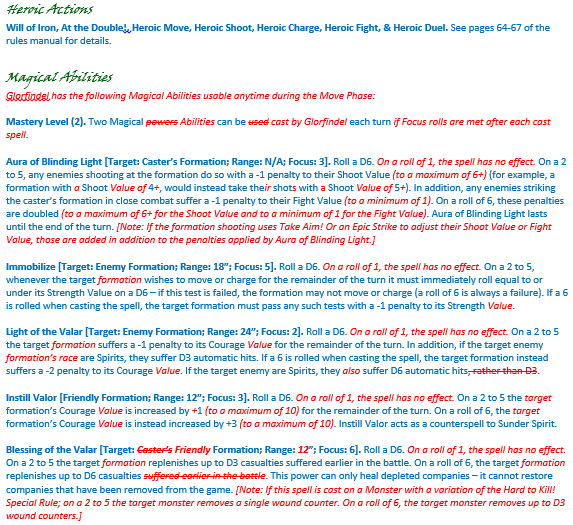
Over at the one-ring.co.uk website, one of the dedicated WotR players mentioned that there was some confusion with the Blessing of the Valar spell above for Glorfindel:

oli-zapp wrote:
One question about the the spell for Glorfindel's ability to cast "Blessing of the Valar" - is Glorfindel able to heal himself with this spell? Or should he only heal other companies or monsters?

Thank you for answering, maybe it will be more clear if you put this information additionally within his profile!

If you look at the target in the spell in question above - I changed it from Caster's Formation (meaning only themselves) to Friendly Formation. I intended this to mean that it could be cast on any target formation within the Army (including oneself); so, yes - to answer Oli's question - he can cast the spell on himself and remove wound counters with the "Blessing of the Valar" spell. In fact this is why the "Note" was added at the end of the text for the spell - it dawned on me that a lot of things within the WotR rules don't take into consideration what effect they have on Monster Formation - since usually the descriptions are targeted at Infantry and Cavalry Formation.

Great question, Oli, and thanks for helping to clarify this for others reading the blog, as well! I appreciate your input!

ELVEN HEROES

  • (E) Elladan - Underpriced by 65%
  • (E) Elrohir- Underpriced by 65%
  • (L) Haldir HE - Underpriced by 55%
  • (C) Guard Captain GotGC - Underpriced by 52%
  • (C) Wood Elf Captain MS - Underpriced by 50%
  • (C) Knight Captain GKR - Underpriced by 50%
  • (C) Commander HEC - Underpriced by 50%
  • (C) High Elf Captain HER - Underpriced by 47%
  • (C) High Elf Captain HEAR - Underpriced by 44%
  • (E) Cirdan of the Havens - Underpriced by 44%
  • (E) Haldir, Guardian of Lorien - Underpriced by 42%
  • (C) Galadhrim Captain GR - Underpriced by 41%
  • (C) Galadhrim Captain GAR - Underpriced by 38%
  • (C) Wood Elf Captain WEW - Underpriced by 38%
  • (E) Thranduil, King of Mirkwood - Underpriced by 34%
  • (E) Galadriel, Lady of Lothlorien - Underpriced by 34%
  • (L) Rumil GoCG - Underpriced by 28%
  • (L) Elven Stormcaller GoCG - Underpriced by 26%
  • (E) Awen Evenstar - Underpriced by 22%
  • (E) Elrond, Master of Rivendell - Underpriced by 22%
  • (C) Elven Stormcaller GotGC - Underpriced by 20%
  • (L) Gildor Inflorion GH - Underpriced by 19%
  • (L) Erestor RG - Underpriced by 18%
  • (E) Celeborn, Lord of Lothlorien - Underpriced by 13%
  • (C) Elven Stormcaller GR - Underpriced by 9%
  • (E) Galadriel, Protectress of Lothlorien - Overpriced by 14%
  • (E) Gil-galad, High King of the Elves - Overpriced by 40%
  • (E) Legolas, Prince of Mirkwood - Overpriced by 43%

Sorting by the cost calculated by the template from cheapest (weakest stat-wise) to most expensive (most powerful):
  • Heroes that should cost 80 Points:
    • (C) Galadhrim Captain GAR
    • (C) Wood Elf Captain WEW
  • Heroes that should cost 85 Points:
    • (C) Galadhrim Captain GR
  • Heroes that should cost 90 Points:
    • (C) High Elf Captain HEAR
  • Heroes that should cost 95 Points:
    • (C) High Elf Captain HER
  • Heroes that should cost 100 Points:
    • (C) Wood Elf Captain MS
    • (C) Knight Captain GKR
    • (C) Commander HEC
    • (L) Haldir HE
    • (E) Elladan
    • (E) Elrohir
  • Heroes that should cost 105 Points:
    • (C) Guard Cptain GotGC
  • Heroes that should cost 110 Points:
    • (C) Elven Stormcaller GR
    • (L) Erestor RG
  • Heroes that should cost 125 Points:
    • (C) Elven Stormcaller GotGC
    • (L) Rumil GoCG
  • Heroes that should cost 130 Points:
    • (E) Haldir, Guardian of Lorien
  • Heroes that should cost 135 Points:
    • (L) Elven Stormcaller GoCG
    • (E) Cirdan of the Havens
  • Heroes that should cost 140 Points:
    • (E) Legolas, Prince of Mirkwood
  • Heroes that should cost 155 Points:
    • (L) Gildor Inglorion GH
  • Heroes that should cost 160 Points:
    • (E) Arwen Evenstar
  • Heroes that should cost 175 Points:
    • (E) Galadriel, Protectress of Lothlorien
  • Heroes that should cost 190 Points:
    • (E) Thranduil, King of Mirkwood
  • Heroes that should cost 200 Points:
    • (E) Celeborn, Lord of Lothlorien
  • Heroes that should cost 215 Points:
    • (E) Gil-galad, High King of the Elves
  • Heroes that should cost 265 Points:
    • (E) Galadriel, Lady of Lothlorien
  • Heroes that should cost 275 Points:
    • (E) Elrond, Master of Rivendell

Shout-out to Elliot! Thanks for suggesting the following post update in your comments - great idea!

WHY DO ALL THE ELF EPIC HEROES HAVE REDUNDANT SPECIAL RULES?

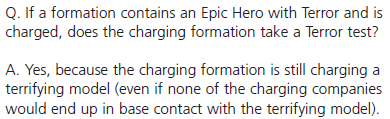
When going through the profiles for the Elf Heroes, all of them have the special rules Pathfinder (Master) and Terror; yet all the companies within the list also have these special rules as well. This would imply that the reason that these rules are included with the Epic Heroes is that they can imbue that ability onto the company or formation of which they are currently included within; however, GW has the rule on page 69 and the Errata which seem to imply otherwise.


OK, GW - that's at least consistently inconsistent! LOL!

I have updated the special rules to exercise the loophole that is contained within the rule on page 69 and to capture the intent of the Errata FAQ question for Terror above. I have changed the rule to explicitly indicate that the special rule is applied to the Epic Hero's company or formation. (Notice that the rule has been pre-appended with the word "Bestow" as well, to emphasize that it is applied to the company/formation as appropriate.) What this means that if I were playing a Gondor & Arnor Army and decided to ally in Legolas, Prince of Mirkwood - and put him within a formation comprised of 6 companies of Minas Tirith Archers he would use his special rules Bestow Pathfinder (Master) and Bestow Terror and that formation would have the special rule Pathfinder (Master) for the entire formation (i.e., Legolas was "helping" them to navigate the terrain that would otherwise be difficult for them to traverse if he were not present) and Terror for the command company in which he was included.

Now, what this means is that we need to look closely at the special rules associated to Epic Heroes and determine which have effect on themselves, their currently residing company or their currently residing formation. This also brings up an interesting sub-feature rule ... Epic Heroes may need to roll their own dice for their attack, separate from those of their company or formation - so it makes it necessary to have several different colored dice when playing the game - and keeping track of who's dice belong to who. [NOTE: We saw this with the post for the modification that was made to the Epic Strike Special rule.]

COMING SOON: I suspect that this will need to be another set of posts per army to discuss each of the special rules owned by Epic Heroes and how they apply to their participating company and/or formation, just to clarify the confusion of whether or not it is a "Bestow" capability or not ... I'll try to get this together for at least the Elves relatively quickly.

Here is a screenshot of the work in progress - just so you all know that it is being worked on!


    Monday, December 22, 2014

    The Misty Mountains (Moria) Unit Cost Analysis

    The Misty Mountains ... (aka Moria) ... swarms and swarms of goblins and gargantuan monsters. It is an army that requires a lot of real world money - because who wants to field a formation of 3 companies? No one, of course - we want to go for the full 9 companies per formation!

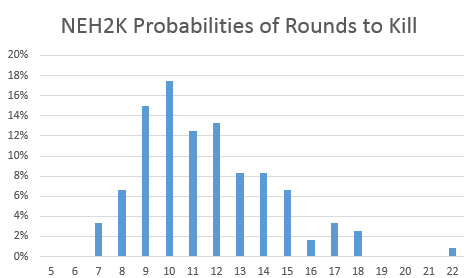
    Also, Moria is the only army that has access to the "Extremely Hard to Kill!" monsters. That alone makes it an even more appealing army; and as we see from the previous post, with 11-12 rounds to kill an NEH2K monster makes it a very fun model to field!

    MORIA WARRIORS


    Keys:
    (C) = Common Formation, (R) = Rare Formation, (L) = Legendary Formation
    [I] = Infantry, [H] = Cavalry, [A] = Artillery, [M] = Monster, [MH] = Monster Hero
    • (R) [I] Gundabad Blackshields - Underpriced by 50%
    • (C) [I] Moria Prowler Warband - Underpriced by 33%
    • (C) [I] Moria Goblin Warband - Underpriced by 25%
    • (R) [M] Spider Queen - Accurately Priced (0% deviation)
    • (R) [M] Cave Troll - Overpriced by 7%
    • (C) [H] Giant Spider Brood - Overpriced by 17%
    • (C) [H] Cloud of Bats - Overpriced by 17%
    • (R) [M] Cave Drake - Overpriced by 23%
    • (C) [H] Warg Pack - Overpriced by 33%
    • (R) [MH] Spellcaster Dragon of Ancient Times - Overpriced by 51%
    • (R) [MH] The Balrog of Morgoth - Overpriced by 59%
    • (R) [MH] Dragon of Ancient Times - Overpriced by 63%
    • (R) [M] Stone Giant - Overpriced by 67%
    • (R) [H] Spider Broodling Swarm - Overpriced by 167%
    Applying the template from cheapest (weakest stat-wise) to most expensive (most powerful) gives the following. Of course, the Monster Heroes are at the bottom where they should be.
    • 15 Points per Company:
      • (C) [H] Warg Pack
      • (R) [H] Spider Broodling Swarm
    • 20 Points per Company:
      • (C) [I] Moria Goblin Warband
    • 30 Points per Company:
      • (C) [H] Cloud of Bats
      • (C) [I] Moria Prowler Warband
      • (R) [I] Gundabad Blackshields
    • 70 Points:
      • (R) [M] Cave Troll
    • 130 Points:
      • (R) [M] Cave Drake
    • 145 Points:
      • (R) [M] Spider Queen
    • 150 Points:
      • (R) [M] Stone Giant
    • 245 Points:
      • (R) [MH] Dragon of Ancient Times
    • 315 Points:
      • (R) [MH] Spellcaster Dragon of Ancient Times
      • (R) [MH] The Balrog of Morgoth
    GOBLIN DRUM UPGRADE

    The Goblin Drum is a command upgrade that is available to the Moria Goblin Warband, the Moria Prowler Warband, and the Gundabad Blackshields. This is actually a pretty interesting upgrade since it combines the effects of a Banner, Drummer, and Taskmaster - and gives a little extra bonus, too, for "At the Double!" failed rolls.


    If we consider the individual costs of each of the upgrades that are included in the Goblin Drum Upgrade we can get a pretty good idea of what it should cost:
    1. For a Banner Bearer, we have been using a base of 25 points for that upgrade and it basically  allows re-rolls for charging and panic tests. So basically, it is 5 points for being an "re-roll" upgrade, 10 points for the first re-roll that it allows for charging and 10 point for the second re-roll that it allows for panic tests.
    2. For the Drummer, it works effectively the same as a Hornblower - and we understand fairly well from the post on Hornblowers that it provides an additional inch to the Move Value (which is already 8" ... 2" more than a standard rank-and-file unit - then adding the additional 1" gives 9" for the goblins, meaning that the get effectively 1.5x the amount of move of other units ... not too bad!) Hornblowers and Drummers cost 5 points for each 2 companies in the formation.
    3. For the Taskmaster, it is the same thing as a Hornblower - but instead of Move Value bonus it gives an additional point to the Courage Value. Similarly, that means that that would cost 5 points for each 2 companies in the formation, as well.
    4. For the "At the Double!" re-roll, this would effectively be the same as the Banner Bearer upgrade ... in other words, if it were considered simply by itself it would cost 5 points for being a "re-roll" upgrade and then 10 points for the re-roll it allows for failed "At the Double!" rolls. However, since the Banner Bearer upgrade that is part of the Goblin Drum has effectively already "paid" for the re-roll upgrade 5 point cost - that is done ... so adding it into the combined total would only cost an additional 10 points for the re-roll that it provides.
    Goblin Drum Cost = Banner Bearer Cost + Drummer Cost + Taskmaster Cost + "At the Double!" Re-roll Cost

    Goblin Drum = [(Re-roll Upgrade Cost) + (Charging Re-roll Cost) + (Panic Re-roll Cost)] + [(+1 Move Cost)] + [(+1 Courage Cost)] + [(Re-roll Upgrade Cost) + ("At the Double" Re-roll Cost)]

    {NOTE: Again, notice that since the Re-roll Upgrade Cost is already paid by the Banner, it doesn't need to be re-paid by the "At the Double!" one ...}

    Goblin Drum = [(5 points) + (10 points) + (10 points)] + [2.5 points / company] + [2.5 points / company] + [(5 points) + (10 points)] = 35 points + 5 points / company

    So this means that if there is only 1 Company in the Formation of Moria Goblin Warband, the Goblin Drum Upgrade would cost 35 points + 5 points for the 1 company = 40 Points for the Upgrade! (When I updated the rule for the profiles I wrote it such that it costs 40 Points for the command company - meaning the 1st company in the formation.)


    If we took the entire 9 companies worth of goblins, this would cost:

    Goblin Drum = 35 points + [5 points/company*(9 companies)] = 35 points + 45 points = 80 points

    Let's just spell it out, so there is no confusion:


    THE SPIDER QUEEN & SPIDER CHARGE SPECIAL RULE

    Similar to what we mentioned in the Forgotten Kingdoms Unit Cost Analysis for Gwaihir, It seems like whenever there is a Monster Hero that is worthy of being a "leader of monsters" (e.g., Treebeard or Mordor Troll Chieftain) they come along with a "<Race> Charge" special rule that applies to the race of which they are a member. It would make sense for the Spider Queen to have the "Spider Charge" special rule as well [in fact we have already included that in her cost above].


    CAVE DRAKE'S GAPING MAW SPECIAL RULE

    OK, so this is only useful if it the formation that the Cave Drake is fighting has an enemy Hero? Furthermore, the Cave Drake is not a Monster Hero and has no might - yet we are going to give him a free Heroic Duel ... really?

    I think this is one of the more "broken" and "unused" rules in the game. The rule is very conditional (the target formation must have a Hero in it) and doesn't really make sense for what it is trying to accomplish. I'm not usually for an entire re-write of a rule, I try to keep to the original intent - but this one is just plain "broken". So, here is my suggested update to the rule:


    This change makes the rule a lot more versatile and able to be used regardless of there being a Hero in the target formation or not, but still allows the Drake to be a Hero-killer if the situation presents itself. In fact, now that the Drake has Striking Order (Monster), Terror, Hard to Kill!, and Gaping Maw, he is a lot more of a scary beast to go up against. In fact, any formation that goes up against it will have multiple D3 casualties unless they include a Hero ... but then losing a fight with a Hero in the formation runs the risk of that Hero getting eaten! Now that is an interesting twist of tactics! Since this is an uncommonly powerful special rule - I suggest that it cost 3-times the normal special rule cost for a non-heroic Warrior-Monster ... 15 Points. This cost is included in the Cave Drake's Point Cost listed above.


    DRAGON OF ANCIENT TIMES' BREATHE FIRE SPECIAL RULE

    Within the WotR rulebook (pg 186), they give the Range and the Strength of the Breath Fire special rule, but what about the Movement Penalty Associated (none, half or full) with the attack and what about Long Range rule on pg 39? Also, does it does not mention if it covers a swath or if is it single target ...

    As per pg 37 of the rule manual, dragons have full 360-degree Line of Sight for the shooting attack.

    I think the "right answer" for this special rule is that it has no movement penalty (i.e., the dragon can move its full flying move distance and still use the Breathe Fire special rule during the shoot phase and then can subsequently charge during the charge phase). This makes the rule a lot more "epic", which I think Moria needs that to compensate for its weaker profiles for the rank-and-file troops.

    I suggest that the special rule read as follows:

    FLYING MONSTERS IN MORIA

    Just looking at the models of the various monsters that are included in the Moria Army List, there are several formations where the monster has wings. In fact, I distinctly recall playing against a Balrog and the player insisted that since the Balrog has wings on the model, he has the Flying Monster Movement and Charge - even though his profile only says "Monster". Let's clarify it once and for all.
    • Cloud of Bats = Counts as a Flying Monster for moving and charging (due to its Flock of Doom Special Rule) … It counts as Cavalry for base size (for rotation, translation and reconfiguration Move costs), charging and associated bonuses to charge (+6 dice against Infantry, Artillery & Monsters; +2 dice against Cavalry & Flying Monsters), and Earth-shaking charge.
    • Cave Drake = Not a Flying Monster or Monster Hero ... just a regular Monster. The argument for this one being a Flying Monster always confused me - GW's model doesn't have wings on it, either.
    • Dragon of Ancient Times = Flying Monster Hero. Scary beyond all reason (especially if it has its magic upgrade and uses Breathe Fire! per the change above).
    • The Balrog of Morgoth = Not a Flying Monster, but a Monster Hero. Has magic that can be cast in 360-degree Line of Sight, but CANNOT fly over a formation of Gondor Warriors of Minas Tirith to get a rear attack every turn! (/Exasperated huff!)
    SWOOP ATTACK Special Rule for Flying Monsters

    Just as we talked about the Eagle in the Forgotten Kingdoms army list - it makes sense for any Flying Monster to have the Swoop Attack Special Rule. I have included this in the profile costs that are already provided above. Specifically, the rules for the two Flying Monsters in Moria's Army List should be:
    • Dragon gets D3 Stg 6 Hits


    • Bats get D3 Stg 1 Hits per company in the Cloud of Bats' formation

    MORIA HEROES


    Key: (C) = Command Hero, (L) = Legendary Hero, (E) = Epic Hero
    • (E) Druzhag the Beastcaller - Underpriced by 55%
    • (E) Durburz, Goblin King of Moria - Underpriced by 42%
    • (C) Blackshield Captain GB - Underpriced by 38%
    • (C) Goblin Captain MPW - Underpriced by 29%
    • (C) Goblin Captain MGW - Underpriced by 9%
    • (C) Goblin Shaman GB - Underpriced by 5%
    • (C) Goblin Shaman MPW - Accurately Priced (0% deviation)
    • (C) Goblin Shaman MGW - Overpriced by 18%
    • (C) Warg Chieftain - Overpriced by 43%
    Sorting by the cost calculated by the template from cheapest (weakest stat-wise) to most expensive (most powerful):
    • Heroes that should cost 35 Points:
      • (C) Warg Chieftain
    • Heroes that should cost 55 Points:
      • (C) Goblin Captain MGW
    • Heroes that should cost 70 Points:
      • (C) Goblin Captain MPW
    • Heroes that should cost 80 Points:
      • (C) Blackshield Captain GB
    • Heroes that should cost 85 Points:
      • (C) Goblin Shaman MGW
    • Heroes that should cost 100 Points:
      • (C) Goblin Shaman MPW
    • Heroes that should cost 105 Points:
      • (C) Goblin Shaman GB
    • Heroes that should cost 120 Points:
      • (E) Durburz, Goblin King of Moria
    • Heroes that should cost 220 Points:
      • (E) Durzhag the Beastcaller


      Monday, December 15, 2014

      Extremely Hard to Kill! They were on the Right Path with this One ... [Part 4/5 of the Hard to Kill Series]

      ** PART 4/5 in the Hard to Kill Analysis Series **

      OK, it seems like they were on the right track with this rule - but just didn't take it far enough. In fact, if you look at the rule updates for the "Hard to Kill!" rule and the "Very Hard to Kill!" rule, you should notice that they look very similar to the existing "Extremely Hard to Kill!" rule ... since it was actually one that was relatively "hard" to kill.

      Using the existing EH2K rule and running it through the simulator produced an average of about 9.67 rounds to achieve the "Death Blow" result for the monster.

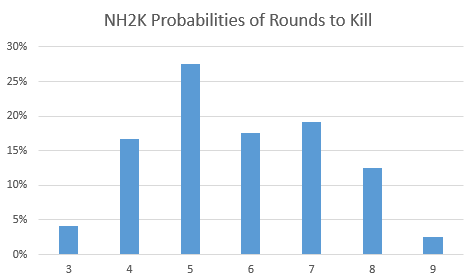
      From part 2/5 and 3/5 of this series of posts, we found that using the updated rules a monster with the new "Hard to Kill!" rule should need about 5-6 rounds to be killed and for the new "Very Hard to Kill!" it should take like 8-9 rounds. In fact, running these through the simulator 120 times gave the following distributions for the new rules:


      This says that a monster with the new "Hard to Kill!" rule will last anywhere from 3-9 rounds (with the most probable being about 5 rounds). In fact, over 1 out of 4 monsters played will have about 5 rounds of lasting value during a Fight Phase, and less than 10% will be outside of the range of 4-8.


      This says that a monster with the new "Very Hard to Kill!" rule will last anywhere from 4-15 rounds (with the most probable being about 8-9 rounds); and 1 out of every 5 will fall in the 8 to 9 round range - and less than 10% (1 out of every 10) will be outside of the range of 6 to 11 rounds.

      We updated the "Extremely Hard to Kill!" rule as follows and re-ran the simulator with these values:


      The simulator provides 11.6 rounds for the average of this new table. That seems a lot better.


      This says that a monster with the new "Extremely Hard to Kill!" rule will last anywhere from 7-18+ rounds (with the most probable being about 10 rounds); and 3 out of every 5 will fall in the 9 to 12 round range - and less than 20% (1 out of every 5) will be outside of the range of 9 to 15 rounds. The really interesting one is the 22 Rounds to Kill outlier ... looking at the rolls ... the hang-up was getting over the first two hurdles of the 1-4 range and 5-8 range that provide 0 and 1 counters, respectively. Once the compilation of counters starts, though - the progress through the remaining ranges goes relatively quickly.

      Under the modification to the rule, the EH2K monster is now effectively twice as durable as the H2K monster ... we think it makes sense to count the EH2K rule as 30 Points instead of 10 for the Special Rule.

      The only three monsters within the rule book that have the EH2K rule are within The Misty Mountains (Moria) army list:
      1. Stone Giant [Monster]
      2. Dragon of Ancient Times [Monster Hero]
      3. The Balrog of Morgoth [Monster Hero]
      Sorry Good, you don't get any such cool behemoths to play with - I guess that is the price of being the good guys!


      The "take home" message appears to be that the more "hard" to kill the rules become ... the larger the swath of ranges of number of round to kill increases (i.e., the more the dice play a role in the killing of the monster). We have played a game with the Balrog once, using the new rules ... and it was definitely worth the 315 points that were paid to field the Monster Hero. I'm still itching to get him back on the field and have another go at it!


      LINKS TO OTHER PARTS OF THE HARD TO KILL SERIES

      1. Overview of the Problem [Part 1/5]
      2. Hard to Kill! Rule [Part 2/5]
      3. Very Hard to Kill! Rule [Part 3/5]
      4. Extremely Hard to Kill! Rule [Part 4/5]
      5. Ridiculously Hard to Kill! Rule [Part 5/5]

      Tuesday, December 9, 2014

      Movement Types and Limits Series - Reconfiguration Movement of Infantry Formations Comprised of 4 Companies [Part 3/23]

      As per the plan, we will continue with Infantry Formations that are comprised of 4 and 5 Companies and their associated permutations of reconfiguration and the movement cost associated with those reconfigurations.

      Well, let's get right to it!


      This means that in order to reconfigure in this fashion, it would require a move of 8.98". This means it would require an "At the Double!" or Heroic Move to allow this to occur.


      This would require a move distance of 4.93". This could be accomplished with most Formations (baring those that have really small move values [e.g. Hobbit Militia]).


      For Case 4-3 it appears that the worst case movement is Company 4. So reconfiguring in this fashion would require a Move of 6.41".


      For Case 4-4 it appears that the worst case movement is Company 3 or 4. So reconfiguring in this fashion would require a Move of 4.93".


      For Case 4-5 it appears that the worst case movement is Company 4. So reconfiguring in this fashion would require a Move of 8.31".

      For Case 4-6 it appears that the worst case movement is Company 3. So reconfiguring in this fashion would require a Move of 6.41".


      SUMMARIES (for the 4 Company Formation)


      LINKS TO OTHER PARTS OF THE WFMC PROGRESS SERIES


        LINKS TO OTHER PARTS OF MOVEMENT TYPES AND LIMITS SERIES


        • Movement Types and Limits Series - Reconfiguration Movement of Cavalry Formations Comprised of 2-3 Companies [Part 11/23]
        • Movement Types and Limits Series - Reconfiguration Movement of Cavalry Formations Comprised for 4 Companies [Part 12/23]
        • Movement Types and Limits Series - Reconfiguration Movement of Cavalry Formations Comprised of 5 Companies [Part 13/23]
        • Movement Types and Limits Series - Reconfiguration Movement of Cavalry Formations Comprised of 6 Companies [Part 14/23]
        • Movement Types and Limits Series - Reconfiguration Movement of Cavalry Formations Comprised of 7 Companies [Part 15/23]
        • Movement Types and Limits Series - Reconfiguration Movement of Cavalry Formations Comprised of 8 Companies [Part 16/23]
        • Movement Types and Limits Series - Reconfiguration Movement of Infantry Formations Comprised of 9 Companies [Part 17/23]
        • Movement Types and Limits Series - Cavalry Movement Example 1 from Page 33 of WotR Rulebook Analysis [Part 18/23]
        • Movement Types and Limits Series - Cavalry Movement Example 2 from Page 33 of WotR Rulebook Analysis [Part 19/23]
        • Movement Types and Limits Series - Cavalry Movement Example 3 from Page 33 of WotR Rulebook Analysis [Part 20/23]
        • Movement Types and Limits Series - Reconfiguration Summary of Cavalry Formations by Company Size [Part 21/23]
        • Movement Types and Limits Series - Cavalry Restrictions of Reconfiguration by Formation Name Summary [Part 22/23]
        • Using WFMC to Verify Movement Examples [Part 23/23]

        Tuesday, December 2, 2014

        Angmar Unit Cost Analysis

        Angmar is a very interesting army. It almost seems like an afterthought to Mordor and is intended to be a fluff army in order to use models that are already created but didn't fit thematically into the other Evil army lists. I think the equivalent on the Good side would be The Forgotten Kingdoms - but that has a lot more uniqueness to that army - separate from the other Good Armies. In fact, it is curious that 60% of the common formations are basically copies of other army's formations ... and 100% of the Epic Heroes are from Mordor.
        • (C) [I] Ghostly Legion = Warriors of the Dead (Gondor & Arnor)
        • (C) [H] Ghostly Riders =  Riders of the Dead (Gondor & Arnor)
        • (C) [I] Spectral Host [Unique to Angmar]
        • (C) [I] Carn Dum Warband = Dunlending Huscarls (The Fortress of Isengard [Not identical but very similar])
        • (C) [I] Angmar Orc Warband = Mordor Orc Warband = Isengard Orc Warband
        • (C) [I] Court of Fallen Kings [Unique to Angmar]
        Also, why is the Necromancer not part of the Angmar army? Another thing is … almost all the formations have the We Stand Alone special rule - so the Epic Heroes cannot join but only 3/7 formation types! It just seems like a lot is missing a lot. I guess the only option is to use them as an Ally Army (as called out for The Forgotten Kingdoms on pages 85 & 86) for other Evil armies. Enough musing - let's get on with it!

        ANGMAR WARRIORS

        Keys:
        (C) = Common Formation, (R) = Rare Formation, (L) = Legendary Formation
        [I] = Infantry, [H] = Cavalry, [A] = Artillery, [M] = Monster, [MH] = Monster Hero
        • (L) [MH] Buhrdur - Underpriced by 29%
        • (C) [I] Carn Dum Warband - Underpriced by 25%
        • (L) [MH] Gulavhar, the Terror of Arnor - Underpriced by 2%
        • (C) [I] Ghostly Legion - Overpriced by 20%
        • (C) [H] Ghostly Riders - Overpriced by 20%
        • (C) [I] Angmar Orc Warband - Overpriced by 50%
        • (R) [M] Shade - Overpriced by 54%
        • (C) [I] Spectral Host - Overpriced by 78%
        • (R) [I] Court of Fallen Kings - Overpriced by 85%
        • (R) [I] Werewolf Pack - Overpriced by 85%
        Applying the template from cheapest (weakest stat-wise) to most expensive (most powerful) gives the following. Of course, the Legendary Monster Heroes are at the bottom where they should be.
        • 10 Points per Company:
          • (C) [I] Angmar Orc Warband
        • 40 Points per Company:
          • (C) [I] Carn Dum Warband
        • 45 Points per Company:
          • (C) [I] Spectral Host
        • 50 Points per Company:
          • (C) [I] Ghostly Legion
          • (C) [H] Ghostly Riders
        • 65 Points per Company:
          • (R) [I] Court of Fallen Kings
          • (R) [M] Shade
          • (R) [I] Werewolf Pack
        • 175 Points:
          • (L) [MH] Buhrdur
        • 205 Points:
          • (L) [MH] Gulavhar, the Terror of Arnor
        GULAVHAR'S SWOOP ATTACK FOR BEING A FLYING MONSTER HERO

        Just as we talked about the Eagle in the Forgotten Kingdoms army list - it makes sense for any Flying Monster to have the Swoop Attack Special Rule. I have included this in the profile cost for Gulavhar provided above.


        BUHRDUR'S EPIC STRENGTH SPECIAL RULE

        Similar to the Epic Strike special rule that several Epic Heroes have, Buhrdur has the special rule for Epic Strength. As we have shown in previous posts when doing the analysis for Hero profiles:
        • Strength = +/- 5 points per value point
        • Special Rules = +/- 10 points per spell, special rule, or epic action 
        Using these two point values logically together:

        Epic Strength = Special Rule = +10 Points = 2*(+5 Points) = 2* (+1 Strength)

        There we have it ... Epic Strength is a 10 point special rule, so the equivalent Strength Value boost for that would be an increase of 2 Strength Value Points.

        Epic Strength will increase the Strength Value of a Hero by +2 to a maximum of 10. Furthermore, if there are other special rules that have taken effect (even after Epic Strength has been applied) the minimum that a Epic Hero's Strength Value with Epic Strength applied can be reduced to is 2 (0 + 2).


        ANGMAR HEROES


        Key: (C) = Command Hero, (L) = Legendary Hero, (E) = Epic Hero
        • (C) Ghostly Captain GL - Underpriced by 41%
        • (C) Ghostly Captain GR - Underpriced by 41%
        • (E) The Dwimmerlaik - Underpriced by 40%
        • (E) The Tainted - Underpriced by 40%
        • (E) The Witch-king - Underpriced by 15%
        • (C) Barbarian Chieftain - Accurately Priced (0% deviation)
        • (C) Angmar Shaman - Overpriced by 33%
        • (C) Orc Captain - Overpriced by 43%
        Sorting by the cost calculated by the template from cheapest (weakest stat-wise) to most expensive (most powerful):
        • Heroes that should cost 35 Points:
          • (C) Orc Captain
        • Heroes that should cost 50 Points:
          • (C) Barbarian Chieftain
        • Heroes that should cost 75 Points:
          • (C) Angmar Shaman
        • Heroes that should cost 85 Points:
          • (C) Ghostly Captain GL
          • (C) Ghostly Captain GR
        • Heroes that should cost 210 Points:
          • (E) The Dwimmerlaik
          • (E) The Tainted
        • Heroes that should cost 235 Points:
          • (E) The Witch-King